Bladder Cancer Treatment in Lucknow
Evaluation of blood in the urine, cystoscopy, TURBT, BCG therapy, robotic cystectomy and long-term follow-up, with each step explained.
Medically reviewed by Dr. Anshuman Singh, M.S., M.Ch. Urology (Gold Medalist), Uro-Oncologist & Robotic Surgeon
Book a consultation
Talk to a bladder cancer specialist in Lucknow
- Consultation with Dr. Anshuman Singh, at the clinic or by video
- Reports and scans reviewed with you; a second opinion if you already have a plan
- Clinic OPD Mon–Fri: 6–9 PM; teleconsultation by prior appointment
Request a call back
The clinic will call you to fix the date and time.
Bladder Cancer Treatment in Lucknow
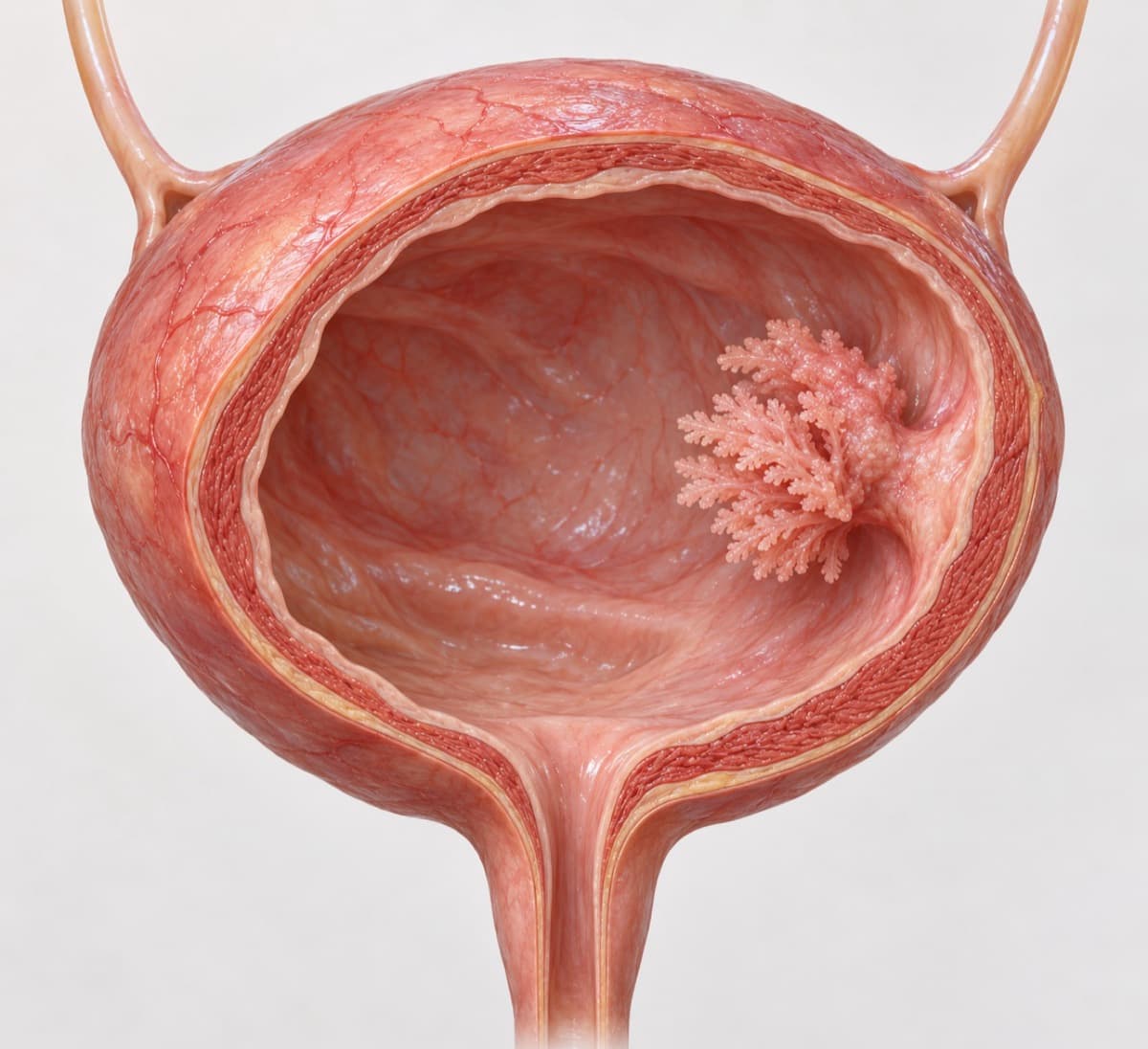
If you or someone in your family has been diagnosed with bladder cancer, or if blood in the urine has raised concern, you are in the right place. At Uro-Onco Connect in Lucknow, I evaluate each patient individually, understand the stage and grade of the disease, and put together a treatment plan that makes sense for that specific situation.
Bladder cancer is one of the more treatable urological cancers when caught early. Even in advanced cases, there are meaningful options. This page will walk you through everything you need to know.
The treatment approach for urinary bladder cancer depends almost entirely on two things: how deep the tumour has grown into the bladder wall, and how abnormal the cancer cells look under a microscope.
Whatever brings you here, the path forward starts with a proper staging workup, and then a treatment plan tailored to where your disease actually is.
Cancer Pathways
For structured, stage-wise information on what to expect, what to discuss with your treating Uro-Oncologist or Urologist, and the key decisions involved at each stage, please visit the Cancer Pathway section of this website.
Explore Cancer Pathways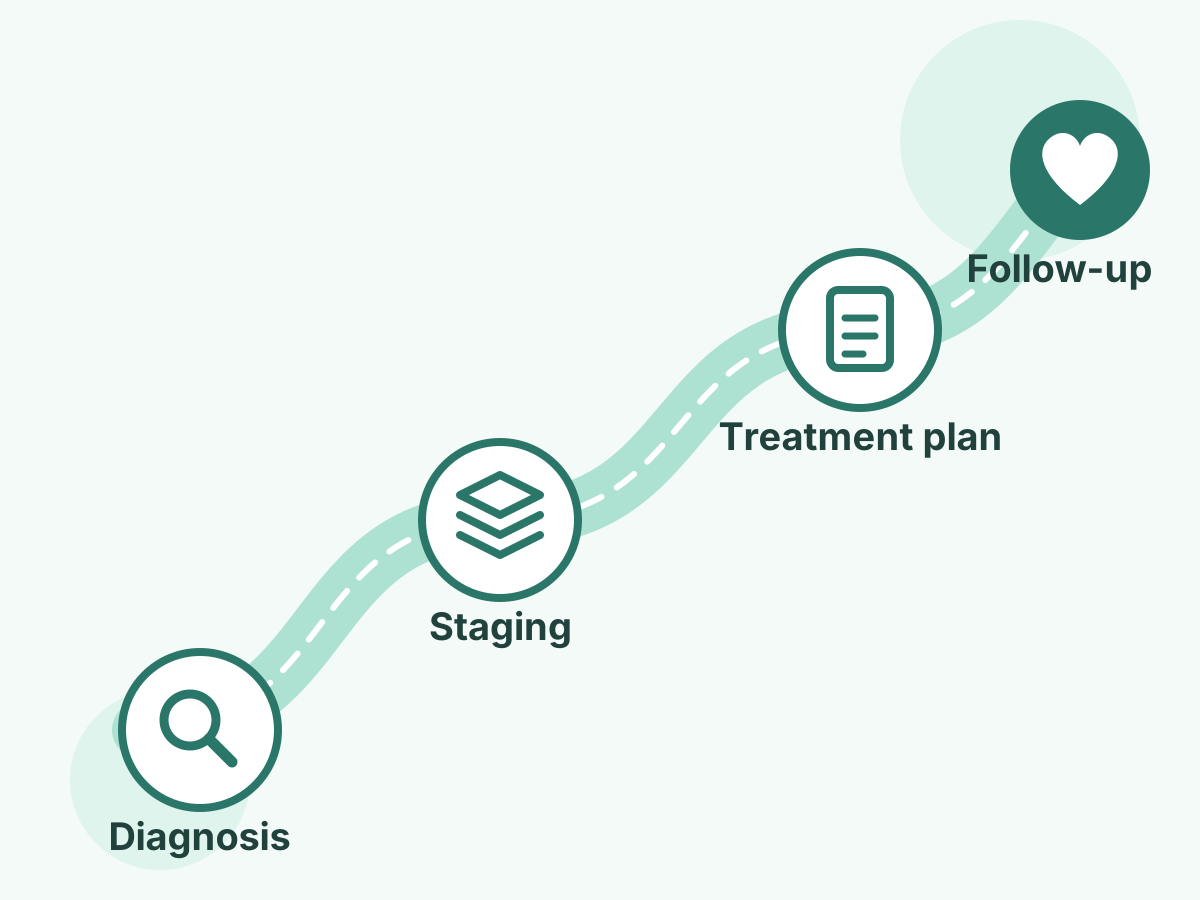
Your Treating Specialist
Meet Our Expert

Dr. Anshuman Singh
MS, MCh (Urology) | Fellowship in Robotic Uro-Oncology
A Uro-Oncologist is a urologist who has undergone additional training specifically in urological cancers. My training included a formal fellowship in Robotic Uro-Oncology.
For patients in Lucknow and the surrounding region, having access to that level of specialisation without travelling to Delhi or Mumbai is something I have made it a point to provide through Uro-Onco Connect.
Recognise the Signs
Symptoms of Bladder Cancer
The symptom that brings most of my bladder cancer patients in is blood in the urine. Sometimes the urine is visibly pink or red. Sometimes there is no visible colour change, but blood shows up on a urine test. Both matter equally.
Burning or discomfort while urinating, especially if tests keep coming back negative for infection
Needing to urinate more often than usual, particularly at night
Feeling an urgent need to urinate but being unable to pass much
Recurrent urinary tract infections that do not fully respond to treatment
Pelvic pain or lower back pain in more advanced disease
Unexplained weight loss or fatigue in late-stage presentations
Important: Painless blood in urine is the most common early sign. People assume that if something does not hurt, it cannot be serious. Painless blood in urine should always be investigated without delay.
Know Your Risk
Risk Factors for Bladder Cancer
Smoking
Responsible for roughly half of all bladder cancer cases.
Occupational Exposure
Long-term exposure to chemicals in dye, rubber, leather, and paint industries.
Chronic Bladder Irritation
Repeated infections, long-term catheter use, or untreated bladder stones.
Schistosomiasis
A parasitic infection associated with squamous cell carcinoma.
Previous Pelvic Radiation
Patients who had pelvic radiation carry a modestly elevated risk.
Age & Gender
More common in men and after age 55.
Family History
A first-degree relative with bladder cancer increases risk.
Diagnostic Process
How Bladder Cancer Is Diagnosed
No diagnosis can be confirmed without looking inside the bladder.
Urine Tests
Cytology, culture, and microscopy to detect abnormal cells and rule out infection.
Imaging
Ultrasound for initial detection; CT urogram for complete staging including kidneys, ureters, and lymph nodes.
Cystoscopy
The most important step — a thin camera tube is passed into the bladder for direct visualisation and biopsy.
TURBT
Removes the visible tumour and provides tissue for definitive staging. Often both diagnostic and therapeutic.
Key Information
Understanding Stage & Grade
Stage: How Deep?
Non-Muscle-Invasive (NMIBC)
Confined to the inner lining. Includes Ta, T1, and CIS. The majority of bladder cancers present at this stage.
Muscle-Invasive (MIBC)
Grown into the muscle wall (T2) or beyond (T3, T4). Higher risk of spread; requires aggressive treatment.
Grade: How Abnormal?
Low-Grade
Cells look relatively normal. Grow slowly but tend to come back.
High-Grade
Very abnormal cells. More aggressive with higher progression risk.
Note: A T1 high-grade tumour is treated very differently from a Ta low-grade tumour.
Comprehensive Care
Treatment Options for Bladder Cancer
Don't Delay
When to See a Specialist
Blood in the urine, even if it appeared only once
Persistent burning or frequency not responding to antibiotics
A bladder tumour seen on ultrasound or CT scan
Urine cytology showing abnormal cells
Due for surveillance cystoscopy after previous diagnosis
BCG therapy that has failed
Want a second opinion on cystectomy recommendation
Concerned About Blood in Urine?
Do not wait. Book an urgent Uro-Oncology evaluation.
Expert Review
Why Patients Seek a Second Opinion
Advised bladder removal — want to know if preservation is possible
BCG therapy did not work — unsure what comes next
Want another expert to confirm muscle invasion before major surgery
Told cancer is low risk — want clarity on follow-up
Not sure the current follow-up schedule is appropriate
You are not obligated to switch care. If your current plan is sound, I will tell you that. If there is something worth revisiting, I will explain exactly what and why.
What to Expect
Recovery & Follow-up
After TURBT
- Home within 1-2 days
- Catheter removed in 1-2 days
- Mild blood in urine for a few days
- Avoid strenuous activity 2 weeks
- Work in 1-2 weeks
After BCG Therapy
- Outpatient, 30-60 mins
- Drink extra fluids after
- Urine precautions for 6 hours
- Mild burning 1-2 days
- Report systemic reactions
After Cystectomy
- Hospital stay: 5-7 days
- Full recovery: 4-6 weeks
- Bowel function normalises
- Drainage education provided
- Ongoing follow-up essential
Recurrence Surveillance
Bladder cancer has one of the highest recurrence rates among solid tumours. Ongoing surveillance is non-negotiable.
For NMIBC
Cystoscopy at 3 months. Low-risk: annual after first year. High-risk: every 3 months for 2 years.
For MIBC After Cystectomy
CT every 3-6 months for 2 years, then annually. Regular blood tests and urethral review.
Be Prepared
Questions to Ask Your Doctor
What is the exact stage and grade of my cancer?
Is my cancer non-muscle-invasive or muscle-invasive?
Do I need a second TURBT to confirm staging?
Is BCG therapy appropriate for my situation?
Is there any role for bladder preservation?
What type of urinary diversion would suit me?
How often do I need cystoscopy after treatment?
What are the signs of recurrence to watch for?
Are there any clinical trials I might be eligible for?
Accessibility
Serving Lucknow & Beyond
Patients from Lucknow, Kanpur, Unnao, Raebareli, Sitapur, Hardoi, Barabanki, Faizabad, Sultanpur, Pratapgarh, Bihar, and Uttarakhand.
Teleconsultation
By prior appointment, for patients outside Lucknow or unable to visit.
Book Virtual Visit →Languages
Hindi & English
Common Questions
Frequently Asked Questions
From the blog
Plain-language articles on urological cancers

Prostate Cancer
Erections After Prostate Cancer Surgery: What Is Realistic and What Helps
Erections are almost always weaker after prostate surgery and recover slowly. This guide explains nerve-sparing, the usual timeline, the treatments that help and the questions to ask.
22 Oct 2026
Prostate Cancer
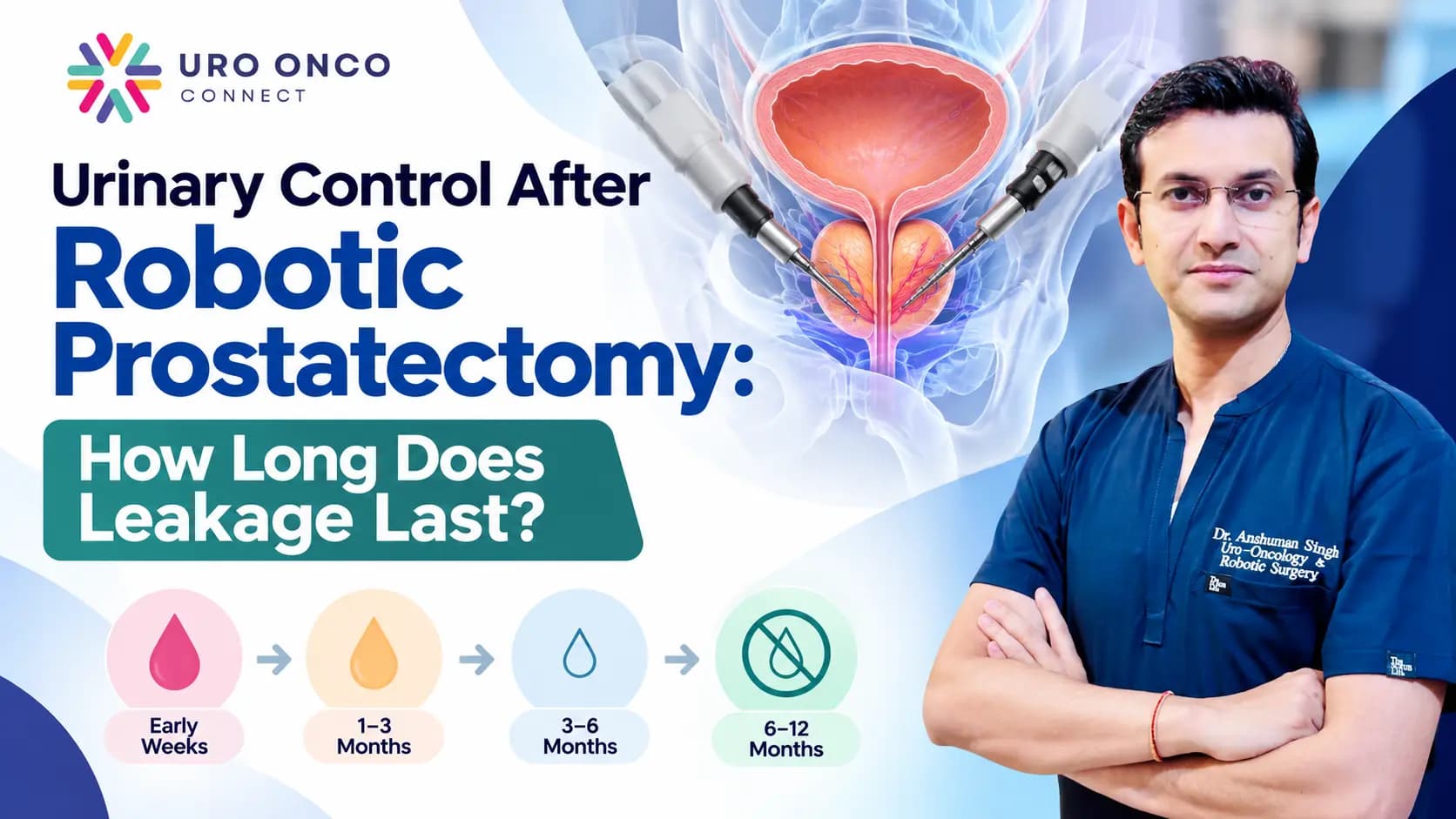
Urinary Control After Robotic Prostatectomy: How Long Does Leakage Last?
Some leakage is expected after prostate surgery, and most men improve steadily over weeks to months. This guide explains the usual timeline, what helps, and when to ask for more help.
21 Oct 2026

Kidney Cancer
Kidney Tumour Biopsy: When Is It Needed and When Can It Be Avoided?
Does every kidney tumour need a biopsy before treatment? Learn when renal tumour biopsy is useful, when it can be avoided and how it influences kidney cancer treatment.
5 Oct 2026
Book Your Consultation Today
Reach out to schedule an in-person or teleconsultation with Dr. Anshuman Singh, Uro-Oncologist in Lucknow.
Reviewed by: Dr. Anshuman Singh, MS, MCh (Urology) | Last updated: April 2026