Prostate Cancer Treatment in Lucknow
Accurate diagnosis, risk assessment and a treatment plan suited to you: PSA evaluation, MRI and biopsy guidance, active surveillance, Robotic Surgery and long-term follow-up.
Medically reviewed by Dr. Anshuman Singh, M.S., M.Ch. Urology (Gold Medalist), Uro-Oncologist & Robotic Surgeon
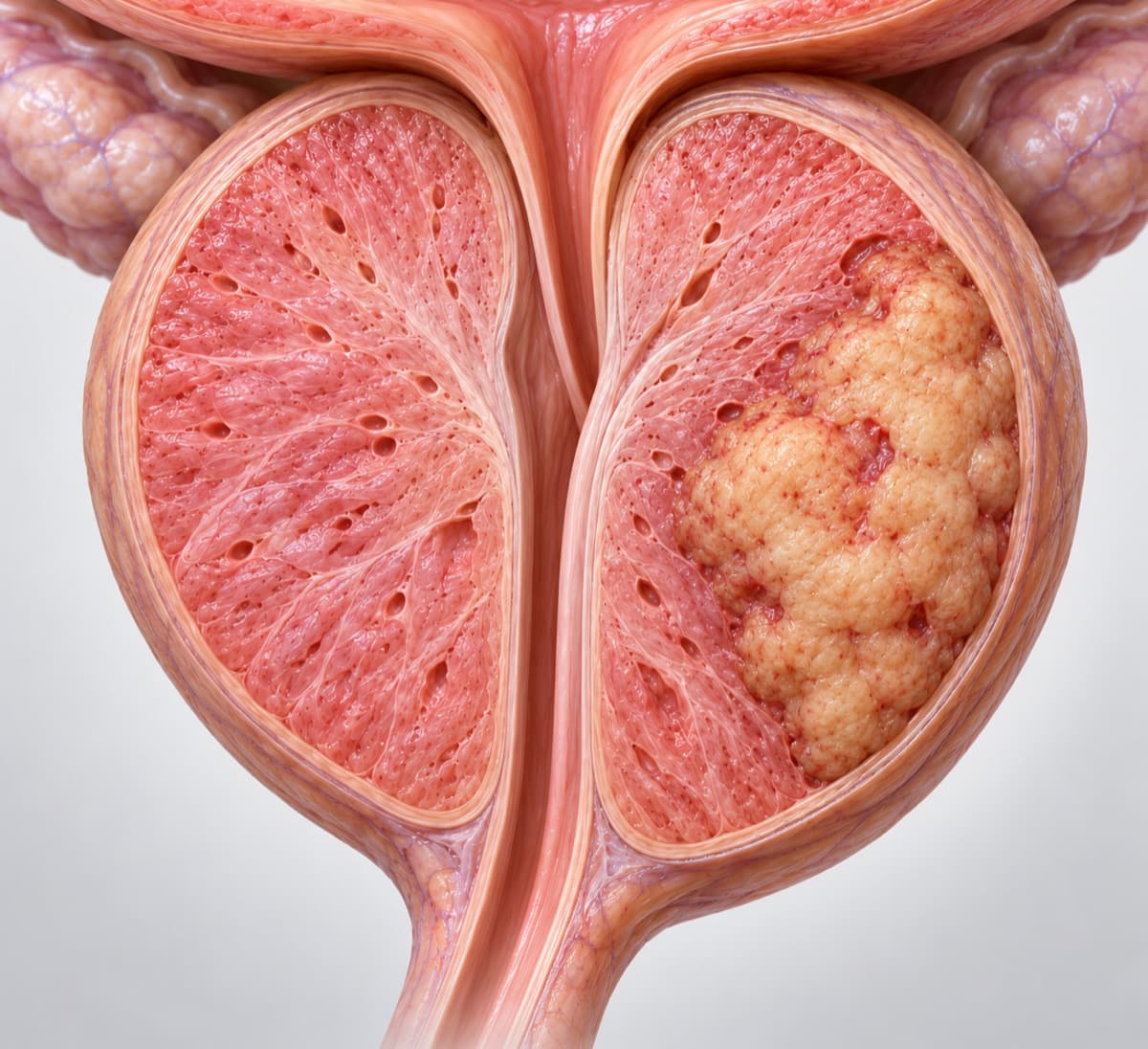
Book a consultation
Talk to a prostate cancer specialist in Lucknow
- Consultation with Dr. Anshuman Singh, at the clinic or by video
- Reports and scans reviewed with you; a second opinion if you already have a plan
- Clinic OPD Mon–Fri: 6–9 PM; teleconsultation by prior appointment
Request a call back
The clinic will call you to fix the date and time.
Prostate Cancer Treatment in Lucknow – Get Second Opinion
Prostate cancer is one of the most common urological cancers in men, and it is also one of the most treatable when the right decisions are made at the right time. What makes it different from many other cancers is that not every case needs immediate treatment. Some patients do better with careful monitoring than with surgery or radiation. Others need prompt intervention. The distinction between these two situations is what a proper Uro-Oncology consultation provides.
In Lucknow, the majority of my prostate cancer patients come in after a PSA test done as part of a general health check. Some come after a urologist found an abnormality on a digital rectal examination. A small number come with symptoms that turned out to be related to their prostate. And a growing number come for second opinions after receiving a diagnosis elsewhere and wanting to understand their options before committing to a treatment plan.
Whichever brings you here, the path forward starts with understanding exactly where the disease is and how it is behaving — and then deciding on treatment from that position of clarity.
If you have been told your PSA is elevated, or if a urologist has suggested further investigation for prostate cancer, you are probably looking for clear answers rather than generic information.
At Uro-Onco Connect in Lucknow, I see prostate cancer patients at every stage of the disease — from an incidentally raised PSA with no symptoms at all, to advanced disease that requires multimodal management. The starting point in every case is the same: a proper evaluation, an honest assessment of what the findings mean, and a treatment plan that is matched to the actual stage and grade of the disease rather than a one-size approach. Consulting a prostate cancer specialist in Lucknow means you do not have to travel to a different city to get that level of care.
Book a Consultation with Dr. Anshuman Singh
Call or WhatsApp to schedule your Uro-Oncology consultation in Lucknow. Teleconsultation is also available for patients from nearby districts.
Cancer Pathways
For structured, stage-wise information on what to expect, what to discuss with your treating Uro-Oncologist or Urologist, and the key decisions involved at each stage, please visit the Cancer Pathway section of this website.
Explore Cancer Pathways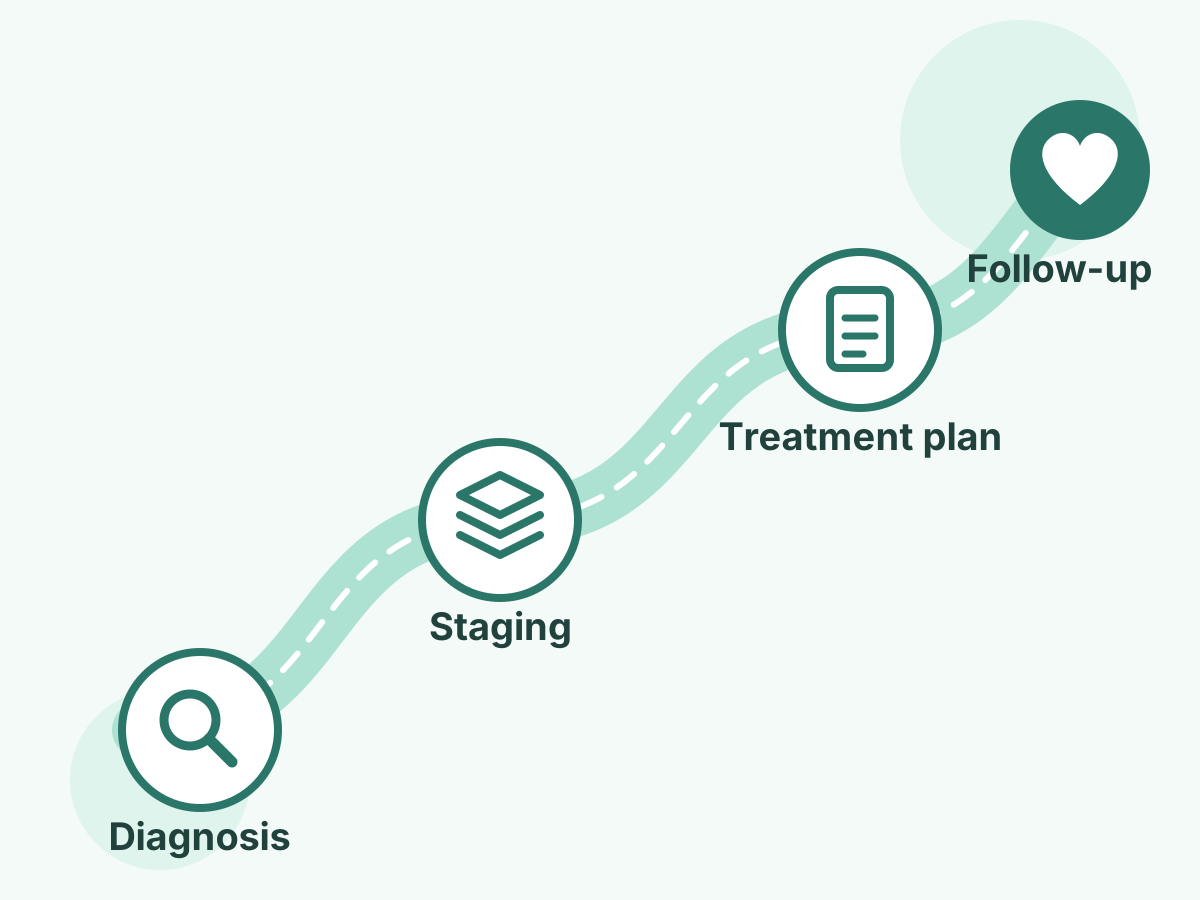
Your Prostate Cancer Treatment Specialist
Meet Our Expert

Dr. Anshuman Singh
MS, MCh (Urology) | Fellowship in Robotic Uro-Oncology
A Uro-Oncologist is a urologist who has undergone additional training specifically in urological cancers. My training included a formal fellowship in Robotic Uro-Oncology.
For patients in Lucknow and the surrounding region, having access to that level of specialisation without travelling to Delhi or Mumbai is something I have made it a point to provide through Uro-Onco Connect.
Recognise the Signs
Symptoms of Prostate Cancer
This is the part most men find surprising: early prostate cancer usually produces no symptoms at all. The prostate gland is located in a position where a small tumour can grow for years without affecting urination or causing any discomfort. By the time symptoms appear, the disease may already be at a more advanced stage.
This is why PSA screening matters. Most of the patients I treat for prostate cancer did not come to me with a complaint. They came because a routine blood test showed a PSA that was higher than expected.
When symptoms do occur in prostate cancer, they are often related to urinary function and may include:
A weak or interrupted urine stream
Difficulty starting urination
Needing to urinate more frequently, especially at night
A feeling of incomplete emptying after urination
Blood in the urine or semen
Burning or discomfort during urination, in some cases
In more advanced disease, bone pain — particularly in the lower back, hips, or pelvis — can be a sign that prostate cancer has spread. Unexplained fatigue or weight loss in combination with urinary symptoms should always be evaluated promptly.
It is important to note that all of the urinary symptoms listed above are far more commonly caused by a benign enlarged prostate (BPH) than by cancer. Symptoms alone cannot distinguish between the two. PSA testing and further evaluation can.
Dr. Anshuman Singh:Most of the patients I treat for prostate cancer did not have a single symptom when they were diagnosed. They came in because their GP checked a PSA as part of a routine health screen, or because a family member pushed them to get it done. That is exactly how it should work. Early prostate cancer is a disease that gives you no warning. If you are a man over 50, or over 45 with a family history, ask your doctor about PSA screening and do not wait for a symptom to appear.
What the Number Actually Means
PSA Testing
PSA stands for Prostate-Specific Antigen. It is a protein produced by the prostate gland and measured through a simple blood test. An elevated PSA does not mean cancer — it means the prostate is producing more of this protein than expected, which can happen for several reasons: cancer, infection, inflammation, benign enlargement, or even vigorous physical activity before the test.
What constitutes a high PSA depends on the patient's age and prostate size. A PSA of 4 in a 45-year-old is more concerning than the same number in a 75-year-old with a large prostate. Rather than treating any single number as a threshold, I look at several factors together:
Actual PSA Value
Whether the value is age-appropriate for the patient.
PSA Velocity
How quickly the PSA has been rising over time. Rate of change matters more than any single reading.
PSA Density
The PSA value divided by the prostate volume on ultrasound — a useful tool for deciding whether a biopsy is needed.
Free-to-Total PSA Ratio
A low ratio (below 15-25%) increases the probability that an elevated PSA is due to cancer rather than benign disease.
Previous PSA History
Context from past PSA readings and any prior biopsy results.
Dr. Anshuman Singh:A PSA of 6 or 7 does not automatically mean cancer, and a PSA of 4 does not mean you are in the clear. I see patients who have been reassured on the basis of a single number without any follow-up, and I also see patients who have been rushed into a biopsy when a more measured approach would have been entirely appropriate. The PSA has to be interpreted in context. That interpretation — not just the number — is what a Uro-Oncology consultation gives you.
Diagnostic Process
How Prostate Cancer Is Diagnosed
Diagnosis involves a combination of blood tests, a clinical examination, imaging, and ultimately a biopsy. I follow a structured pathway for every patient where the findings at each step guide what comes next.
PSA Test and Digital Rectal Examination (DRE)
The diagnostic process usually begins with a PSA blood test. A digital rectal examination is done at the same time. The DRE allows me to feel the surface of the prostate through the rectal wall — an irregular, hard, or asymmetric area raises concern even if the PSA is not markedly elevated. Some cancers are found through DRE in men whose PSA is within the normal range.
Multiparametric MRI of the Prostate (mpMRI)
When the PSA or DRE raises concern, the next step in my practice is a multiparametric MRI of the prostate, not an immediate biopsy. The mpMRI gives detailed images of the prostate gland and identifies any suspicious areas with a high degree of accuracy. Each finding is scored on the PI-RADS scale from 1 to 5, where 1 indicates nothing suspicious and 5 indicates a high probability of significant cancer.
A PI-RADS 1 or 2 finding may mean a biopsy can safely be deferred and the patient monitored. A PI-RADS 4 or 5 finding tells me exactly where to target the biopsy. Getting the MRI before the biopsy also helps avoid over-diagnosing insignificant cancers that would never need treatment.
Dr. Anshuman Singh:In my practice, I prefer to have an MRI done before a biopsy wherever possible. A targeted biopsy based on an mpMRI finding is far more accurate than a random biopsy done without imaging. Random biopsy misses significant cancers and picks up insignificant ones — that combination is the worst outcome for a patient. The MRI often either confirms that a biopsy is needed and shows exactly where to go, or reassures both of us that monitoring is the right path for now.
Prostate Biopsy
If the mpMRI and clinical assessment suggest a biopsy is needed, tissue is taken from the prostate under ultrasound guidance. The standard approach has historically been a transrectal biopsy, where the needle passes through the rectal wall. I prefer a transperineal approach in most cases — the needle passes through the skin between the scrotum and anus rather than through the bowel wall. The transperineal route has a significantly lower risk of infection and provides better access to the anterior part of the prostate where cancers can be missed on transrectal biopsy.
The biopsy samples go to a pathologist who examines them under a microscope and reports the Gleason grade and the percentage of cores involved. This pathology report is the foundation of everything that follows.
Additional Staging Investigations
Once cancer is confirmed, staging investigations determine whether it is confined to the prostate or has spread beyond it. Depending on the PSA and Gleason grade, these may include a bone scan, a PSMA PET CT scan (the most sensitive test currently available for detecting prostate cancer spread), or a CT scan of the abdomen and pelvis. Not every patient needs all of these — the selection is guided by the risk category.
Understanding Your Pathology
Gleason Score, ISUP Grade, and Risk Classification
The Gleason score tells us how abnormal the cancer cells look under a microscope — in other words, how aggressive the cancer is likely to be. It is reported as a sum of two numbers, such as 3+4=7 or 4+3=7. The first number is the most common pattern seen, the second is the next most common. A higher Gleason score means the cells look more abnormal and the cancer is more likely to grow and spread.
Modern reporting uses the ISUP (International Society of Urological Pathology) grade group system, which maps onto the Gleason score and is easier to explain to patients:
ISUP Grade 1
Gleason 6 (3+3)Low-grade. Cancer cells look nearly normal. Slowest growing.
ISUP Grade 2
Gleason 7 (3+4)Intermediate. Predominantly low-grade with some higher-grade component.
ISUP Grade 3
Gleason 7 (4+3)Intermediate, but with a higher proportion of aggressive cells.
ISUP Grade 4
Gleason 8 (4+4)High-grade. Significantly abnormal cells.
ISUP Grade 5
Gleason 9 or 10Very high-grade. Most aggressive category.
The Gleason or ISUP grade is combined with the PSA level and clinical stage (how far the tumour has spread on examination and imaging) to classify the cancer into a risk group. This risk classification drives every treatment decision.
| Risk Group | PSA / Gleason / Stage | Typical Approach |
|---|---|---|
| Low Risk | PSA < 10 and Gleason 6 (ISUP 1) and Stage T1c-T2a | Active surveillance in most cases. Surgery or radiation if patient prefers treatment. |
| Intermediate Risk | PSA 10-20, or Gleason 7 (ISUP 2-3), or Stage T2b-T2c | Surgery or radiation. Hormone therapy may be added for unfavourable intermediate. |
| High Risk | PSA > 20, or Gleason 8-10 (ISUP 4-5), or Stage T3a or higher | Radiation with long-course hormone therapy, or radical prostatectomy with lymph node dissection. |
| Locally Advanced | Stage T3b-T4, any PSA or grade | Multimodal — usually radiation and hormone therapy. Surgery in selected cases. |
| Metastatic | Spread to lymph nodes or distant organs (bone, liver, lung) | Systemic therapy — hormone therapy, novel hormonal agents, chemotherapy where indicated. |
Low Risk
Intermediate Risk
High Risk
Locally Advanced
Metastatic
Comprehensive Care
Treatment Options for Prostate Cancer
There is no single correct treatment for prostate cancer. The right choice depends on the stage and grade of the disease, the patient's age and general health, their priorities around quality of life, and in some cases, a genuine clinical equipoise between two options that are equally valid. Let me walk through each treatment in plain language.
Active surveillance means monitoring a prostate cancer closely without treating it immediately. It is not watchful waiting, which is a passive approach used in older or unfit patients. Active surveillance is an active, protocol-driven process of monitoring, and the decision to intervene is made quickly if the cancer shows signs of progression.
It is appropriate for men with low-risk prostate cancer — ISUP Grade 1, PSA below 10, confined to the prostate — who are at low risk of the cancer progressing meaningfully within their lifetime. The monitoring schedule typically includes:
- PSA every three to six months
- Repeat MRI at one to two years
- Repeat biopsy at one to two years, or earlier if the PSA or MRI changes
Dr. Anshuman Singh:“One of the hardest conversations I have is convincing a patient with ISUP Grade 1 prostate cancer that active surveillance is the right approach. They hear the word cancer and they want it removed immediately. But for a Grade 1 tumour in a man in his 70s, surgery or radiation can cause more harm — incontinence, erectile dysfunction, bowel side effects — than the cancer itself ever would. Active surveillance is not giving up. It is the most carefully monitored approach we have in oncology, and for the right patient, it is the most intelligent choice.”
Radical prostatectomy is the surgical removal of the entire prostate gland along with the seminal vesicles and, in higher-risk cases, the regional lymph nodes. I perform this operation using the robotic platform, which allows for a level of precision that is difficult to achieve with open surgery.
The robotic approach means smaller incisions, significantly less blood loss, a shorter hospital stay, and a faster return to normal activity compared to traditional open surgery. The magnified three-dimensional view provided by the robot is particularly important for the nerve-sparing part of the operation.
Nerve Sparing — What It Means and When It Is Done
The nerves responsible for erectile function run along both sides of the prostate in bundles called neurovascular bundles. In nerve-sparing prostatectomy, these bundles are carefully preserved during the dissection. Whether nerve sparing is possible — and on which side — depends on where the cancer is located and how close it is to the nerve bundle on that side.
Dr. Anshuman Singh:“Nerve sparing during robotic prostatectomy is not a technique you apply to every patient the same way. The decision depends on how close the cancer is to the neurovascular bundle on each side, what the MRI shows, and what the biopsy cores tell us about that side of the gland. My priority is complete cancer removal first. If nerve sparing can be done without compromising that, I will do it. If it cannot, I will not make that trade. Patients who are told upfront that the cancer's location prevents nerve sparing on one or both sides often recover better psychologically than those who are surprised by the outcome.”
Recovery after robotic prostatectomy follows a predictable pattern. The catheter is removed between seven and fourteen days after surgery. Most patients regain urinary control over three to six months, though the timeline varies. Sexual function recovery, when nerves have been preserved, typically takes longer and depends on age and baseline function.
Radiation is an equally valid alternative to surgery for many patients with localised and locally advanced prostate cancer. The choice between surgery and radiation for a given patient depends on multiple factors and is sometimes genuinely a matter of preference after a full discussion of the respective side effects and convenience.
There are two main forms of radiation for prostate cancer:
- External beam radiotherapy (EBRT): Radiation is delivered to the prostate from outside the body using a linear accelerator over several weeks. Modern techniques like IMRT and SBRT allow high doses to be delivered precisely to the prostate while minimising exposure to the rectum and bladder. SBRT can complete the treatment in five sessions rather than the traditional 25-40 sessions.
- Brachytherapy: Radioactive seeds or a high-dose-rate source are placed inside the prostate gland itself. Low-dose-rate (LDR) brachytherapy involves permanent seed implantation, while High-dose-rate (HDR) brachytherapy uses a temporary implant and is often combined with external beam radiation.
For intermediate and high-risk disease, radiation is typically combined with hormone therapy. The duration of hormone therapy alongside radiation depends on the risk category — ranging from four to six months for unfavourable intermediate risk to two to three years for high-risk disease.
I work closely with radiation oncology colleagues for this component of treatment. Patients who come to me for surgery can also be referred for a radiation opinion if they want to compare both options before deciding.
Prostate cancer cells depend on male hormones — primarily testosterone — to grow. Androgen deprivation therapy (ADT) works by reducing testosterone to very low levels, which suppresses cancer growth. It is not a cure on its own for most patients, but it is a powerful tool in the management of prostate cancer at multiple stages.
ADT is used in several situations:
- Combined with radiation for intermediate and high-risk localised disease
- As primary treatment for locally advanced disease not amenable to surgery/radiation
- For metastatic disease, where it is the standard first-line systemic treatment
- As neo-adjuvant or adjuvant treatment around surgery in selected high-risk cases
ADT can be delivered through injections given monthly, three-monthly, or six-monthly. The side effects include hot flushes, fatigue, loss of libido, erectile dysfunction, and over time, effects on bone density, muscle mass, and cardiovascular health. These are real and significant, and managing them is part of the treatment plan.
Dr. Anshuman Singh:"Patients on long-term ADT need monitoring for metabolic effects — bone density, cardiovascular risk, blood sugar. I make sure every patient on hormone therapy for more than six months is on a bone protection protocol and has their cardiovascular risk reviewed. These are not optional extras. They are standard of care that should be part of the conversation from the day ADT is started. Managing hormone therapy well is as important as choosing the right treatment in the first place."
For patients whose prostate cancer has become resistant to standard ADT — a state called castrate-resistant prostate cancer — there are now several effective options beyond traditional chemotherapy.
These include next-generation hormonal agents that target the androgen receptor pathway more potently than standard ADT. They have been shown to significantly extend survival in both non-metastatic and metastatic castrate-resistant settings and are increasingly being used earlier in the disease course, including in castrate-sensitive metastatic disease where they are added to standard ADT.
For patients with certain DNA repair mutations (including BRCA2), PARP inhibitor therapy is a targeted treatment option that has shown meaningful responses. The decision to use any of these agents involves coordination with a medical oncologist and is made based on the specific stage of resistance, prior treatments, and available molecular information from the tumour.
Some men with prostate cancer develop significant urinary obstruction due to the prostate blocking the urethra. In these situations, a TURP — where the obstructing prostate tissue is removed through the urethra using a resectoscope — may be performed to relieve urinary symptoms.
This is a functional procedure, not a cancer cure. It allows urine to flow more easily but does not remove the cancer itself. It may be done before or alongside other cancer treatments depending on the clinical situation.
Choosing the Right Expert
Which Prostate Cancer Doctor / Specialist in Lucknow You Should Visit
Patients often ask whether they need to see a urologist, a Uro-Oncologist, or a medical oncologist for prostate cancer. The straightforward answer is that for most prostate cancer decisions — diagnosis, staging, the choice between surgery and radiation, management of recurrence — a Uro-Oncologist is the right specialist to start with. A Uro-Oncologist is a urologist who has completed additional subspecialty training specifically in urological cancers, which means the clinical framework for every consultation is oncological from the beginning, not just surgical.
The difference matters most in exactly the situations where the stakes are highest: deciding whether a high-risk localised cancer needs surgery or radiation or both, interpreting a PSMA PET CT and understanding what the findings actually mean for the treatment plan, evaluating a rising PSA after treatment and choosing between salvage radiation, hormone therapy, or observation. These are decisions where subspecialty experience changes outcomes.
My own training included an MCh in Urology followed by a formal fellowship in Robotic Uro-Oncology. As a prostate cancer specialist in Lucknow, I manage patients across all stages of the disease — from an incidentally elevated PSA in an otherwise well man, to advanced metastatic disease requiring multimodal systemic treatment. The surgical component of that work — robotic radical prostatectomy, nerve-sparing techniques, extended pelvic lymph node dissection — is one part of a broader oncological practice, not the whole of it.
Which Doctor Do You Actually Need?
For a patient with a newly elevated PSA, a fresh diagnosis of localised prostate cancer, or an unresolved question about whether to have surgery or radiation, a Uro-Oncologist is the appropriate first point of specialist contact. For a patient who has developed castrate-resistant metastatic disease and needs systemic chemotherapy or targeted agents, a medical oncologist should be involved alongside the Uro-Oncologist. Multidisciplinary management is the standard for complex cases, and the two roles complement rather than replace each other.
For patients currently under the care of a general urologist, a Uro-Oncology consultation is worth considering in any of the following situations:
- High-risk or very high-risk localised disease where treatment sequencing matters
- Any recommendation for robotic prostatectomy or extended lymph node dissection
- Disease that has returned after surgery or radiation and the next step is not clear
- A genuine question about whether radiation is a better option than surgery for the specific stage and grade
- Metastatic disease where systemic treatment decisions are being made
As a prostate cancer doctor in Lucknow with subspecialty Uro-Oncology training, I see second-opinion consultations regularly and approach them the same way as any first visit — a full review of all available material, an independent clinical assessment, and a clear recommendation. You are not obligated to change your plan or transfer your care. If what you have been told is correct, you will hear that. If there is something worth reconsidering, it will be explained precisely.
For patients in Lucknow and across Uttar Pradesh, Bihar, and Uttarakhand, this level of subspecialty consultation is available without the need to travel to Delhi or Mumbai. Teleconsultation is also available for an initial review of reports before any in-person visit is arranged.
— Dr. Anshuman Singh, prostate cancer specialist in Lucknow
View full credentials and training backgroundExpert Review
Why Patients Seek a Second Opinion
Prostate cancer treatment involves some of the most genuinely difficult decisions in oncology. Surgery versus radiation for localised disease is one of the few situations in solid tumour oncology where two completely different treatments are roughly equally effective for the right patient, but have meaningfully different side effect profiles. Patients seek a second opinion most often because:
They have been recommended surgery and want to know if radiation is an equally valid option for their specific stage and grade
They have been recommended radiation and want to know if surgery would leave them with better long-term cancer control for their risk category
They have been told active surveillance is appropriate and want to confirm this before deciding not to treat
They have received a diagnosis at a clinic without access to PSMA PET CT or mpMRI and want a re-staging with better imaging
Their PSA has risen after treatment and they want an independent view on what should happen next
They are concerned that their biopsy was not targeted to the right area and want to consider a repeat biopsy with MRI guidance
Second-opinion consultations at Uro-Onco Connect follow the same process as a first visit. I review all available material — PSA history, biopsy pathology, MRI reports and images, staging scans — form an independent assessment, and give you a clear recommendation. If your current plan is the right one, I will tell you that. If there is something worth reconsidering, I will explain exactly what and why. You are under no obligation to switch your care.
What to Expect
Recovery & Follow-up
After Robotic Prostatectomy
Hospital stay is typically two to three days. The urinary catheter is removed between seven and fourteen days post-surgery. Most patients return to desk work within two to three weeks and to full physical activity within six weeks. Urinary control usually returns gradually over three to six months — the majority of patients achieve good continence by six months. Recovery of sexual function, where nerves have been preserved, typically takes six to eighteen months and depends significantly on age and baseline function before surgery.
After Radiation Therapy
External beam radiation involves daily treatments over several weeks on an outpatient basis. During treatment, some patients experience temporary bowel or urinary irritation. Long-term side effects of radiation to the prostate may include changes in bowel habit, urinary urgency or frequency, and effects on sexual function. These are generally less acute than post-surgical side effects but may evolve over months to years. Overall, the side effect profiles of surgery and radiation are different rather than one being better than the other — which side effects matter most to the individual patient is an important part of the treatment decision.
During and After Hormone Therapy
Patients on ADT experience the effects of low testosterone: reduced libido, erectile dysfunction, hot flushes, fatigue, and changes in body composition. These are expected and manageable. Long-term ADT requires monitoring of bone density with DEXA scans and appropriate use of bone-protective agents where indicated. Cardiovascular health, blood sugar control, and muscle strength all need attention during extended ADT.
Follow-up and PSA Monitoring
Prostate cancer follow-up is centred on PSA monitoring. After radical prostatectomy, the PSA should fall to an undetectable level — typically below 0.1 ng/mL — within a few weeks. After radiation, the PSA falls more slowly and does not usually reach zero.
After Prostatectomy
PSA is checked at three months, six months, and then six-monthly to yearly depending on the risk category. A rising PSA after prostatectomy — biochemical recurrence — is defined as a PSA above 0.2 ng/mL on two consecutive measurements. How this is managed depends on how quickly the PSA is rising, what the original pathology showed, and what PSMA PET CT demonstrates in terms of where the recurrence is located. Options include salvage radiation, hormone therapy, or a combination.
After Radiation
PSA monitoring after radiation is done every three to six months. The PSA nadir (the lowest point reached) is a prognostic indicator — a lower nadir is generally better. Biochemical recurrence after radiation is defined as a rise of 2 ng/mL above the nadir. Management of recurrence after radiation may include hormone therapy, or in carefully selected patients, local salvage treatments such as focal cryotherapy or high-intensity focused ultrasound.
Dr. Anshuman Singh:“Biochemical recurrence — a rising PSA when there should be none — does not automatically mean the cancer has spread. The management depends on how fast the PSA is rising, what the original Gleason grade was, and how long after treatment it appeared. Some patients need salvage radiation promptly. Some can be monitored carefully. Getting that assessment from a Uro-Oncologist rather than a general practitioner makes a material difference in what is done next and whether the window for potentially curative salvage treatment is used effectively.”
Be Prepared
Questions to Ask Your Doctor
A well-prepared patient makes better decisions. These are the questions worth asking at any prostate cancer consultation:
What is my exact PSA, Gleason score, ISUP grade, and clinical stage?
What risk category does my cancer fall into — low, intermediate, or high risk?
Am I a candidate for active surveillance, and if so, what does monitoring involve?
What is the difference in outcomes and side effects between surgery and radiation for my specific case?
Is nerve-sparing surgery technically possible given where my cancer is located?
If surgery is done, what is the likelihood that I will need further treatment afterward?
If radiation is done, what is the role of hormone therapy and for how long?
What imaging should I have before treatment to make sure we know where the disease is?
What does follow-up look like after treatment, and what PSA level would trigger further action?
Are there any clinical trials I should know about for my disease profile?
Accessibility
Serving Patients in Lucknow and Surrounding Areas
Uro-Onco Connect serves patients from Lucknow and from across the surrounding region of Uttar Pradesh and neighbouring states. Patients regularly come from Kanpur, Unnao, Raebareli, Sitapur, Hardoi, Barabanki, Faizabad, Ayodhya, Sultanpur, Pratapgarh, Varanasi, and Allahabad, as well as from Bihar and Uttarakhand.
For patients who cannot travel, teleconsultation is available. A virtual appointment can be used to review PSA reports, biopsy pathology, MRI findings, and staging results, and to provide a treatment recommendation before the patient makes the journey to Lucknow. Many patients send their reports by WhatsApp or email in advance, which allows the consultation to be more focused and productive when they arrive.
Teleconsultation
By prior appointment, for patients outside Lucknow or unable to visit.
Book Virtual Visit →Report Submission
PSA records, biopsy reports, MRI images, and staging scans can be shared in advance.
Languages
Hindi and English
Common Questions
Frequently Asked Questions
No. PSA can be elevated due to a benign enlarged prostate, a prostate infection, inflammation, or even strenuous physical activity before the test. An elevated PSA means further evaluation is needed — not that cancer is present. The appropriate next step is a Uro-Oncology consultation, not panic and not dismissal.
No. Low-grade, low-risk prostate cancer in older patients often does not require immediate treatment. Active surveillance — close monitoring without intervention — is a safe and evidence-based approach for many patients with ISUP Grade 1 disease. The decision is based on stage, grade, age, and the patient's own priorities.
A PSA test is a blood test that measures a protein produced by the prostate. It can indicate that further investigation is needed but cannot diagnose cancer. A biopsy takes tiny tissue samples from the prostate and is the only way to confirm or rule out cancer under a microscope. A PSA test comes first; a biopsy is done only when there is sufficient reason to suspect cancer.
Yes. Robotic radical prostatectomy is performed by Dr. Anshuman Singh at Uro-Onco Connect in Lucknow. The procedure offers smaller incisions, less blood loss, faster recovery, and better precision compared to traditional open surgery. Whether robotic prostatectomy is the right treatment for a specific patient depends on the stage and grade of the cancer and the patient's overall health.
Most patients are discharged within two to three days after robotic prostatectomy. The catheter is removed between seven and fourteen days. Light activity can resume within two to three weeks. Urinary control typically improves over three to six months. Sexual function recovery, where nerves are preserved, takes longer and depends on age and baseline function before surgery.
Yes, absolutely. A second opinion consultation at Uro-Onco Connect involves reviewing all available reports and imaging and giving you an independent assessment. You are not obligated to transfer your care. If your current plan is sound, you will be told that. If there is a meaningful alternative worth considering, it will be explained clearly.
No. A full range of prostate cancer treatment — PSA evaluation, mpMRI-targeted biopsy, active surveillance, robotic prostatectomy, coordination of radiation therapy and hormone therapy, and long-term surveillance — is available in Lucknow through Uro-Onco Connect.
Biochemical recurrence means the PSA is rising after treatment when it should not be. After surgery, this is a PSA above 0.2 ng/mL on two consecutive tests. After radiation, it is a rise of 2 ng/mL above the lowest point reached. Management depends on how quickly the PSA is rising, the original Gleason grade, and what imaging shows. Options include salvage radiation, hormone therapy, or active monitoring. Assessment by a Uro-Oncologist is essential to make the right choice.
From the blog
Plain-language articles on urological cancers

Prostate Cancer
Erections After Prostate Cancer Surgery: What Is Realistic and What Helps
Erections are almost always weaker after prostate surgery and recover slowly. This guide explains nerve-sparing, the usual timeline, the treatments that help and the questions to ask.
22 Oct 2026
Prostate Cancer
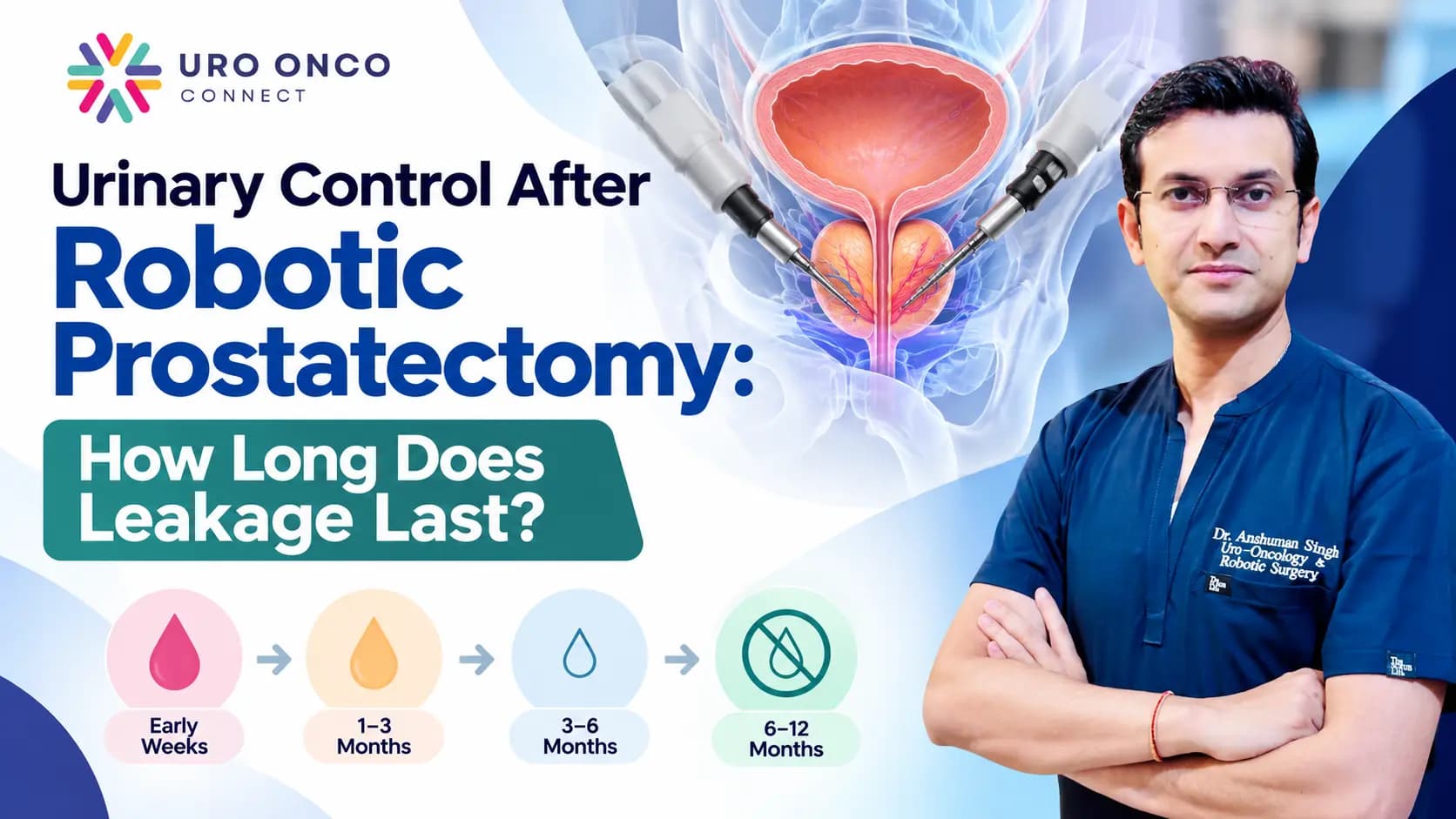
Urinary Control After Robotic Prostatectomy: How Long Does Leakage Last?
Some leakage is expected after prostate surgery, and most men improve steadily over weeks to months. This guide explains the usual timeline, what helps, and when to ask for more help.
21 Oct 2026

Kidney Cancer
Kidney Tumour Biopsy: When Is It Needed and When Can It Be Avoided?
Does every kidney tumour need a biopsy before treatment? Learn when renal tumour biopsy is useful, when it can be avoided and how it influences kidney cancer treatment.
5 Oct 2026
Book Your Consultation Today
Reach out to schedule an in-person or teleconsultation with Dr. Anshuman Singh, prostate cancer specialist in Lucknow. Visit urooncoconnect.com or call and WhatsApp us directly.
Reviewed by: Dr. Anshuman Singh, MS, MCh (Urology), Fellowship in Robotic Uro-Oncology | Last updated: April 2026