Robot-Assisted Uro-Oncology Surgery in Lucknow: robotic surgery, explained honestly
In Robot-Assisted Surgery, the surgeon controls fine instruments through a few small cuts, using a magnified 3D view. It is used for prostate, kidney and bladder cancer operations. Dr. Anshuman Singh explains whether it suits your cancer, what it can offer, and where the limits lie.
Medically reviewed by Dr. Anshuman Singh, M.S., M.Ch. Urology (Gold Medalist), Uro-Oncologist & Robotic Surgeon
Book a consultation
See Dr. Anshuman Singh at the clinic
An unhurried one-to-one discussion with Dr. Anshuman Singh, with your family welcome, so that you understand every option before you decide. Clinic OPD Mon–Fri: 6–9 PM, Uro-Onco Connect, Gomti Nagar.
- Simple bookingSend a request online, or call the clinic.
- Quick replyThe clinic team calls back within 3 hours.
- PrivateYour details and reports are kept confidential.
- +91-9559776664Call or WhatsApp the clinic
Request a consultation
Send a request; the clinic will call you to fix the time.
Loading the form… or call the clinic on +91-9559776664.
The basics
What Robot-Assisted Surgery is
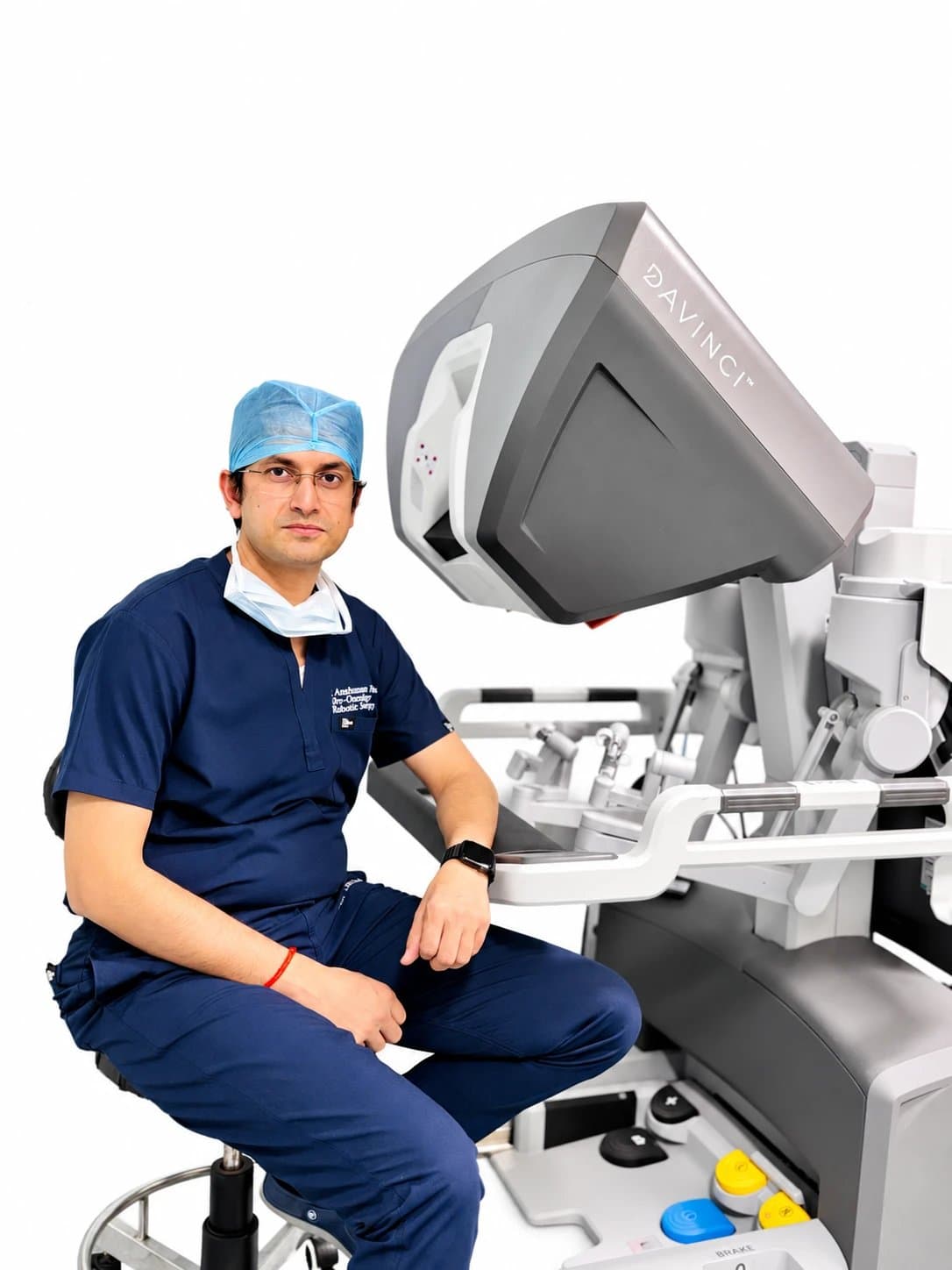
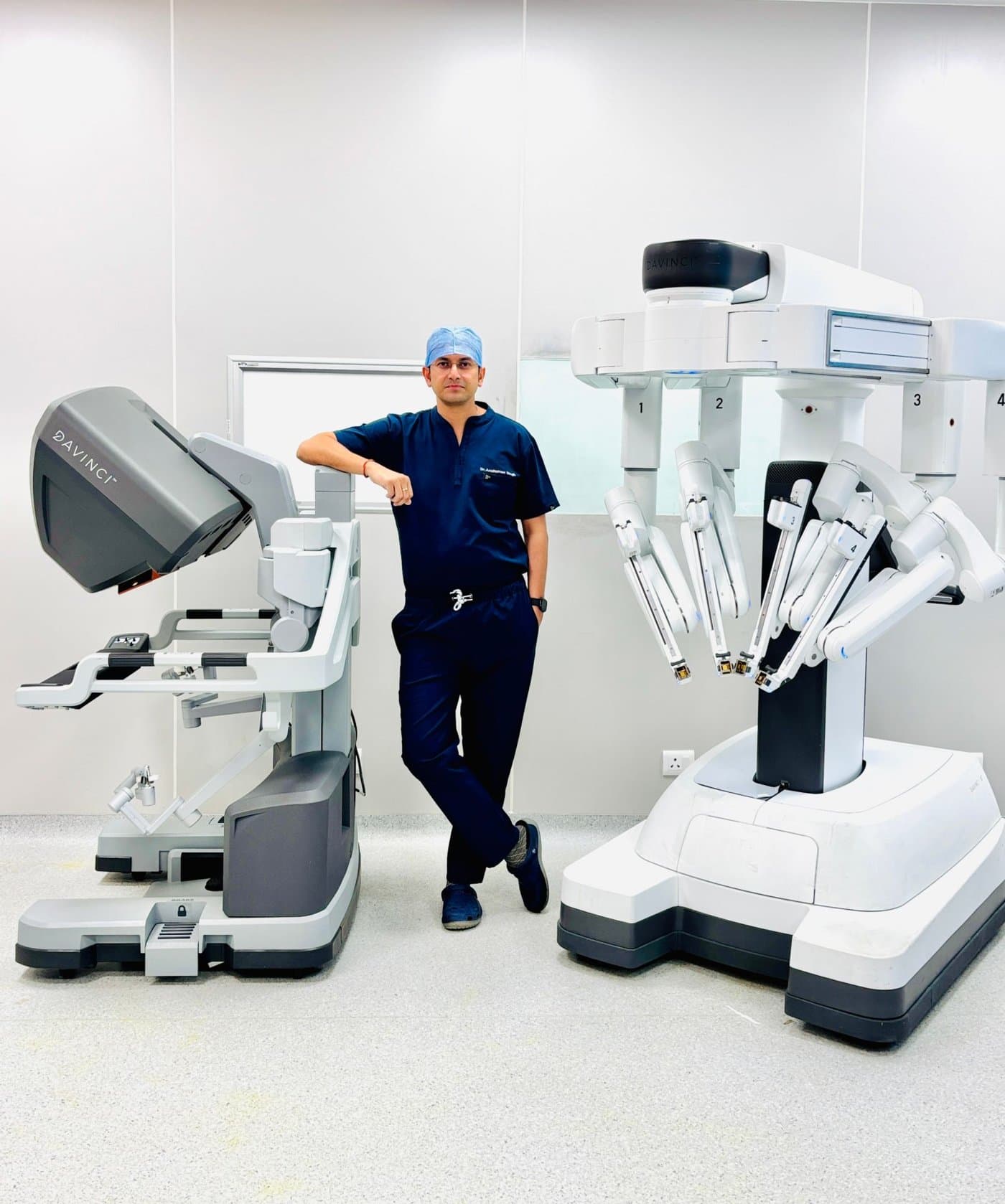
The robot does not operate on its own. The surgeon sits at a console beside the patient and controls the instruments, which move through small cuts in the abdomen. The camera gives a magnified, three-dimensional view, and the instruments can turn and reach in ways a human wrist cannot.
It is a way of doing minimally invasive surgery, in tight spaces such as the pelvis. The aim of the cancer operation is the same as in open surgery: complete removal of the cancer, with as much function kept as possible.
Operations
Where it is used in Uro-Oncology
- Radical prostatectomy
- Removal of the prostate, with the nerves that control erections spared where it is safe for the cancer, and the pelvic lymph nodes removed when needed.
- Partial nephrectomy
- Removal of a kidney tumour while keeping the rest of the kidney, repaired with stitches inside the body.
- Radical nephrectomy and nephroureterectomy
- Removal of a kidney, or of a kidney and ureter, through small cuts.
- Radical cystectomy
- Removal of the bladder and nearby organs, with lymph node removal and a new route for urine, which can also be built using the robot.
- Lymph node operations
- In selected cases of testicular or penile cancer, nodes in the pelvis, groin or back of the abdomen can be removed.
What it can offer
Benefits, and their limits
- Smaller wounds, less blood loss and a shorter hospital stay than open surgery in many operations.
- A clear, magnified view that helps the surgeon to protect nerves, vessels and healthy tissue.
- Cancer control that is comparable to well-performed open surgery. The cancer result depends on the stage and the quality of the operation, not on the machine.
- It is a tool, not a guarantee. It does not suit every patient or every tumour, and some cancers are better treated with open surgery.
Is it right for you?
What decides whether Robotic Surgery is advised
- The type and stage of the cancer, and its position.
- Previous operations in the area, and your general health, including heart and lungs.
- Whether a robot is available at the hospital where the operation would take place.
- Your own wishes after the options, risks and costs are explained.
- In some cases, such as very large tumours or tumours extending into large veins, open surgery is the better choice, and you will be told so.
Surgery and recovery
What to expect
- Before
- Tests, an anaesthetic check and a full discussion of the operation, the risks and what recovery looks like.
- The operation
- Under general anaesthetic, usually taking a few hours depending on the procedure.
- In hospital
- A few days in most cases, with early walking, pain control and a check of the wounds and any catheter.
- At home
- Gradual return to normal life over weeks, with a staged return to heavy lifting. Follow-up visits check the cancer report, wound healing and recovery of function.
Risks
Risks to know about
Every operation carries risks, such as bleeding, infection, injury to nearby organs, clots and anaesthetic problems. A robotic operation may occasionally need to be converted to open surgery for safety. The specific risks of your operation, and your own risk, are explained before you decide.
Cancer Pathways
For structured, stage-wise information on what to expect, what to discuss with your treating Uro-Oncologist or Urologist, and the key decisions involved at each stage, please visit the Cancer Pathway section of this website.
Explore Cancer Pathways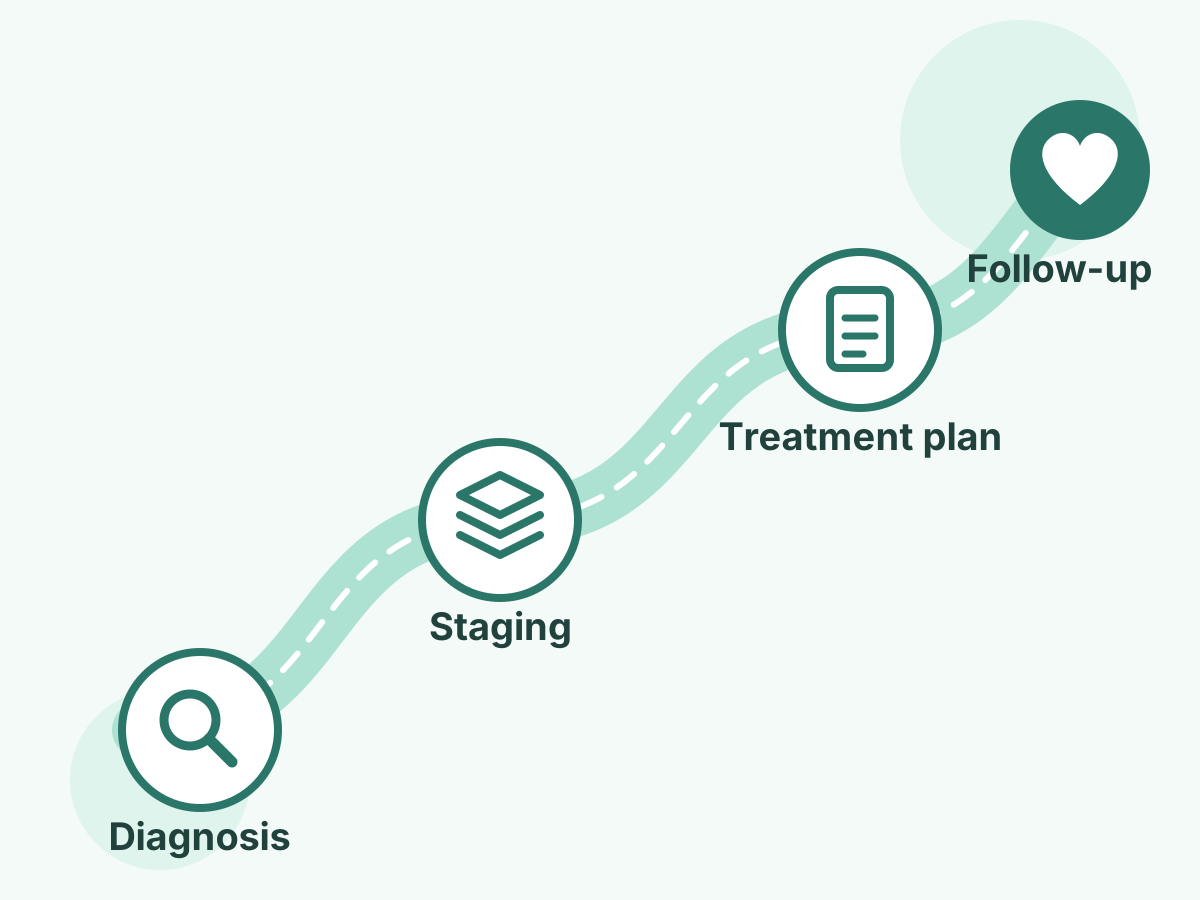
Meet the doctor
Dr. Anshuman Singh
Uro-Oncologist and Robotic Surgeon, with a practice devoted entirely to cancers of the kidney, bladder, prostate, testis and penis.
Qualifications and training
- M.B.B.S.GSVM Medical College, Kanpur
- M.S. General SurgeryKing George's Medical University, Lucknow
- M.Ch. Urology (Gold Medalist)Kasturba Medical College, Manipal
- Fellowship in Uro-Oncology & Robotic SurgeryFellowship-certified by the Urological Society of India · Medanta, Gurugram
- Visiting Fellow, Robotic Uro-OncologyFundació Puigvert, Barcelona, Spain · EAU-sponsored training stay, Jan–Feb 2024
- Clinical Observer, Robotic Pelvic OncologyUniversity College London Hospitals, London, U.K.
- Evidence-based decisionsEach option is weighed against current guidelines and discussed openly, stage by stage.
- Robotic Surgery where it helpsMinimally invasive and robotic approaches for complex cancers that need precision and organ preservation.
- Quality of life mattersCancer control comes first, with equal attention to continence, sexual function and kidney health.
- Time to decideIndividual plans made through unhurried consultations, so you can choose with confidence.
Dr. Singh's personal website: urooncologist-lucknow.com
Common questions
Frequently asked questions
Can't find your question? Call or message the clinic, or see all questions.
No. The surgeon controls every movement from a console. The robot carries out what the surgeon does.
From the blog
Plain-language articles on urological cancers
Prostate Cancer
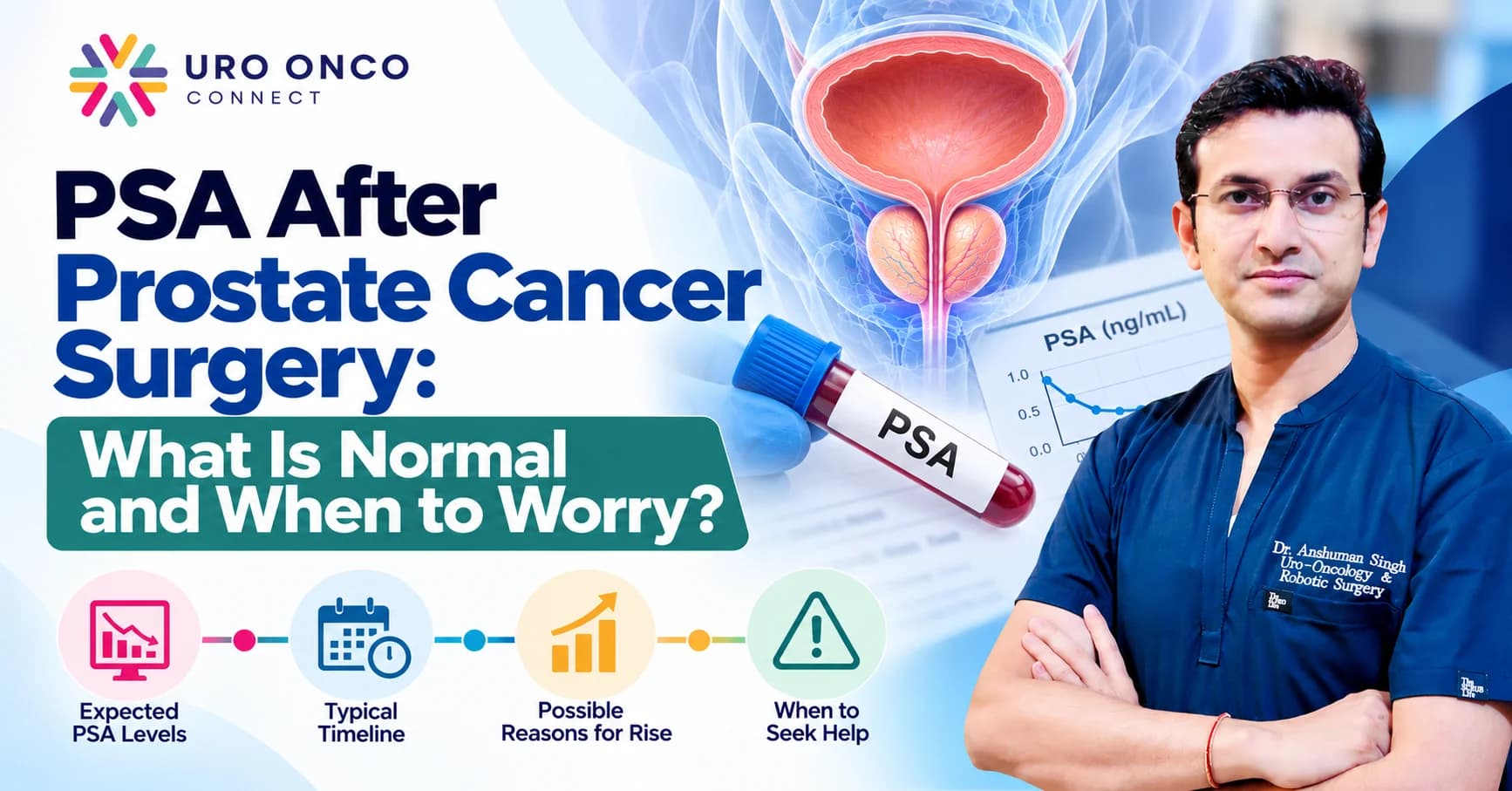
PSA After Prostate Cancer Surgery: What Is Normal and When to Worry?
After prostate removal, PSA should fall to a very low level. This guide explains the follow-up schedule, what a rising PSA means, and the tests and treatments that follow.
23 Oct 2026
Prostate Cancer
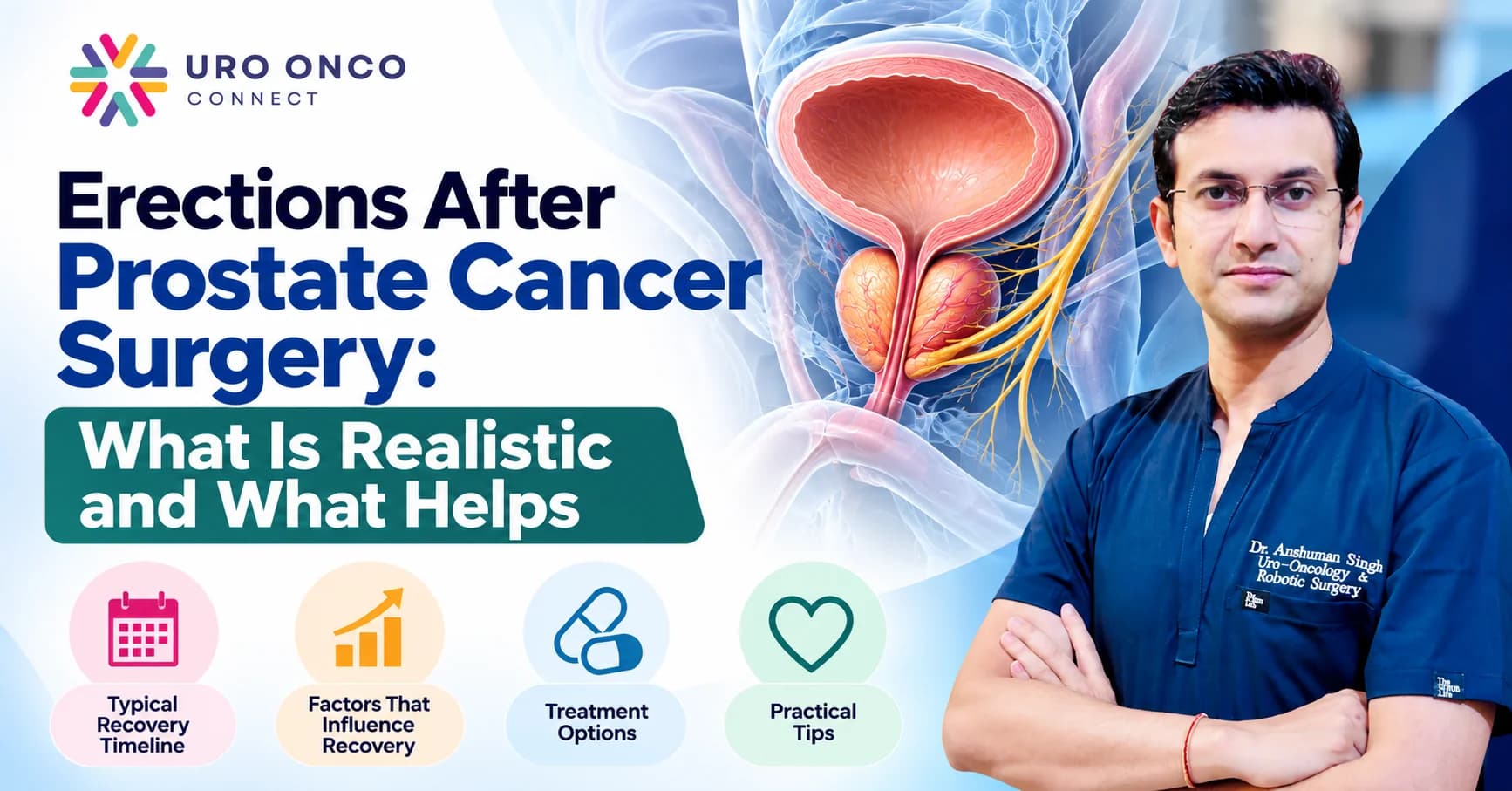
Erections After Prostate Cancer Surgery: What Is Realistic and What Helps
Erections are almost always weaker after prostate surgery and recover slowly. This guide explains nerve-sparing, the usual timeline, the treatments that help and the questions to ask.
22 Oct 2026
Prostate Cancer
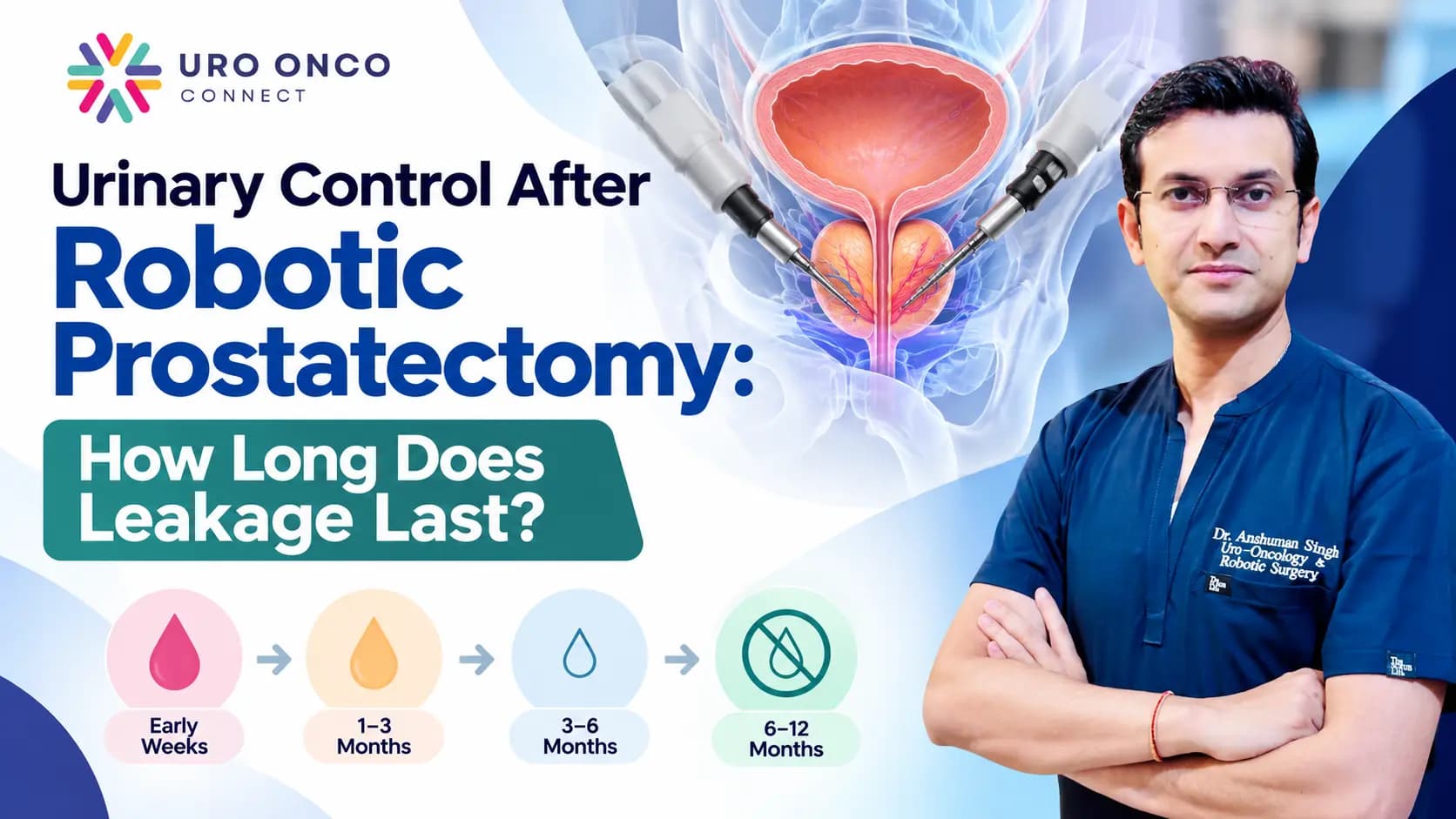
Urinary Control After Robotic Prostatectomy: How Long Does Leakage Last?
Some leakage is expected after prostate surgery, and most men improve steadily over weeks to months. This guide explains the usual timeline, what helps, and when to ask for more help.
21 Oct 2026
Patient reviews
What patients and families say
“I would like to express my heartfelt gratitude to Dr. Anshuman Singh for the exceptional care and expertise he provided during my prostate cancer treatment. From the very beginning, Dr. Singh demonstrated an outstanding level of professionalism and compassion.”
Vinod Kumar Bhat
Patient
“Last year on 25th May, 2024, I underwent robotic prostate surgery performed by Dr. Anshuman Singh and I couldn’t be more grateful for the exceptional care and expertise I received. From my very first consultation, Dr. Anshuma took the time to clearly explain my diagnosis, treatment options, and what to expect before, during, and after the surgery. ”
Malik Girish Anand
Patient
“Dr. Anshuman Singh is an extremely expert and caring doctor. Provided accurate diagnosis and consistent consultations throughout prostate treatment at Medanta. His constant availability and attention made the entire process reliable and comforting.”
Radhika Chemicals
Patient
Ready to talk about your diagnosis?
Clinic OPD Mon–Fri: 6–9 PM at Gomti Nagar. Teleconsultation by prior appointment.